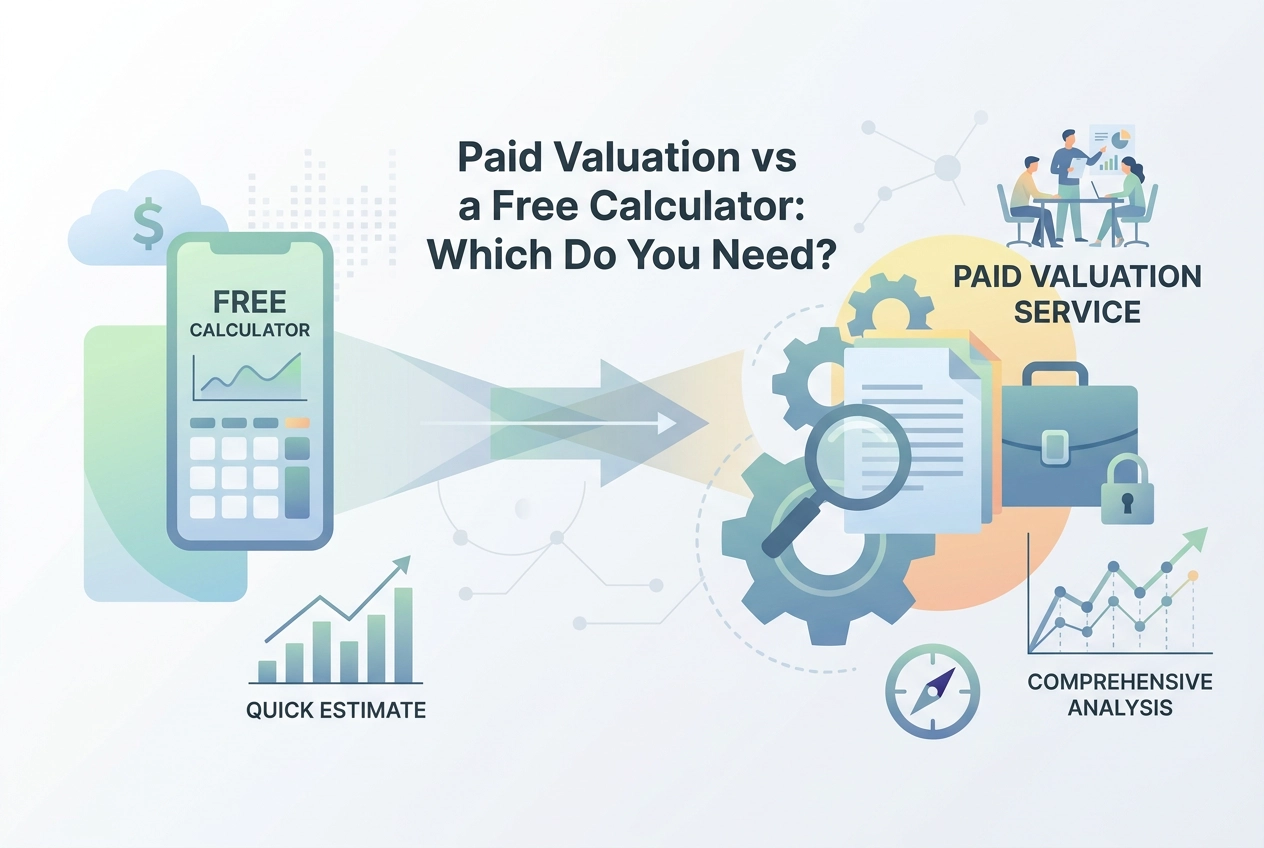
Ask a free calculator what your business is worth and you will get a number in two minutes. Ask a lender, the ATO, or a buyer to accept it and the conversation changes quickly. The difference is not accuracy for its own sake. It is whether the figure arrives with a method, evidence, and a record of the reasoning behind it.
That gap separates a desktop estimate from a formal business valuation service. A paid independent valuation buys a defensible number, built on the most relevant and reliable information known, or reasonably foreseeable, at the valuation date. A calculator often does the job when you only need to decide whether going to market is worth the effort.
This post works through what an independent valuation actually is, what a free calculator really gives you, when a number has to survive scrutiny, and when an indicative estimate is enough. It closes with a decision rule and the questions worth asking before you pay for a valuation.
What an Independent Business Valuation Actually Is
An independent business valuation is a documented method plus supporting evidence, tied to a specific valuation date. The deliverable is a report you can hand to a lender, an accountant or a buyer, not a single figure floated in an email.
The ATO's market valuation guide is blunt about where the value sits: in the process. It calls for retained records, a thoroughly documented process, and inputs and methodology suited to the asset, noting that those records can save considerable time and effort in a review or dispute. Defensibility is a property of how the number was produced, not how confident it sounds.
That is the practical difference between a report and an estimate. A report sets out the method used, the inputs relied on, the assumptions made, the valuation date, and the reasoning that connects them, so anyone reading it later can follow how the figure was reached. An estimate hands you an output with the working removed. How to Use a Business Valuation Calculator in Australia explains how to read that output and what it cannot capture.
Market value also carries a legal definition that shifts with context. The definition in ITAA 1997 does not apply everywhere. Where no special meaning is given, the ordinary meaning applies, with case law and IVSC standards principally relevant.
One point surprises most sellers: engaging a professional does not transfer responsibility. The onus for a replicable and defensible valuation stays with the taxpayer, even after the invoice is paid. If selling is still an open question rather than a decision, our guide to selling a business in Australia covers the sequence from valuation to settlement.
What a Free Calculator Actually Gives You
A free calculator is a speed tool. You type in recent revenue, profit, your industry and business type, and it returns an indicative figure in seconds. That figure comes from what you enter, not from the records behind it. Nothing checks whether the revenue you typed matches your BAS or your profit and loss statement.
Bizzie's free instant business valuation tool is one example of this category. It gives you a number to react to, not a report to hand over.
What you get back is direction and scale. Is the business worth roughly what you assumed, or is your expectation well above or below the range those inputs point to? That is a useful answer when you are deciding whether to start preparing for a sale, open a broker conversation, or hold off for a year.
What you do not get is process. There is no documented method, no stated approach and no retained working papers. The International Valuation Standards require scope, method, data and reporting to be set out and recorded, and a calculator skips all of it. So an indicative estimate is not built to carry weight when a lender, the ATO or an opposing negotiator pulls it apart. Nor will it hold up inside a business acquisition proposal, where the reader can ask how you reached your price.
Read this as a different tool, not a lesser one. A calculator answers whether the numbers point where you think they do. That is a useful answer to a different question.
When the Number Has to Survive Scrutiny
The moment a number leaves your desk and lands in someone else's file, it stops being an estimate and becomes evidence.
That happens more often than sellers expect: capital gains tax events, business restructures, related-party transactions where the parties have not dealt at arm's length, sale negotiations, and any document a lender or adviser will read.
The ATO's market valuation guide sets the standard. A valuation should be based on the most relevant and reliable information known, or reasonably foreseeable, at the valuation date.
That date does much of the work. Information surfacing later can be set aside only if it was not reasonably foreseeable when the valuation was struck.
The groundwork sits earlier, in normalising earnings and applying an industry multiple properly, which our guide to valuing a small business covers.
The guide also draws the responsibility line plainly: the onus for providing a replicable and defensible valuation remains with the taxpayer even when a professional is engaged. You are buying process quality, not the obligation itself.
In practice that means a valuer who is knowledgeable and experienced, who receives proper written instructions, who stays objective, who faces no obstacles to the information they need, and who applies a recognised methodology backed by credible evidence.
There is no shortcut through the ATO. A private ruling cannot confirm whether a valuation methodology is appropriate, so nothing pre-approves your approach.
Lenders and opposing negotiators apply the same pressure from different angles, testing the same figure. That is why the records matter: what was retained, by whom, and whether you could reconstruct the reasoning two years later if asked. The guide notes that documenting the process and keeping all relevant records can save considerable time in a review or dispute.
If the figure sits beside a sale document, the financials in your business plan for selling a small business face the same test.
When an Indicative Estimate Is Enough
When the figure only has to inform your own decision, scrutiny is not the test. Before you spend money on listing preparation or adviser fees, an indicative estimate answers a simpler question: is going to market worth the effort at all?
Three concrete uses:
Price expectation. A quick figure tells you whether the number in your head sits in the right postcode, or whether you are pricing off sentiment.
Broker conversations. If the estimate lands near your expectation, a conversation is worth starting. If it lands well below, you have saved yourself the meeting.
Timing. An indicative number gives you something to plan around, this financial year or next.
The second reasonable use is a benchmark. When someone quotes you a figure, an estimate gives you a rough sense of scale before you pay for anything more formal.
Treat this as a rule of thumb. The line between a defensible report and an indicative estimate is practical guidance, not ATO guidance. The ATO's market valuation guidance sets the standard for defensible valuations, but it does not draw this line, and nothing here implies regulator endorsement.
An estimate's job ends the moment the number has to appear in a tax return, a contract, a court or dispute file, or a lender's document pack. From that point the figure is read by someone with the power to challenge it, and the standard shifts.
The Decision Rule: Match the Tool to the Job
The dividing line is not cost. It is who reads the number.
Independent valuation
Free calculator
Purpose
Informs someone else's decision or obligation
Informs your own decision
Output
Written report, figure tied to a stated valuation date
Indicative figure, no valuation date
Documentation
Method, inputs and assumptions recorded
None retained
Evidence
Verified records and the most relevant, reliable information available at that date
Whatever you type in
Right call
A tax return, contract, lender, court or opposing negotiator will rely on the figure
Deciding whether to sell, whether to push ahead, or whether your price expectation is realistic
Written valuations sit under the RICS Red Book Global Standards, which require documented terms of engagement and assumptions, so the report shows its working. A calculator shows you a figure and nothing behind it.
Apply one question: will this number be read by anyone with the power to challenge it? If yes, you need a defensible number with a documented method, not a fast estimate.
The answer can change. A calculator result may be the right starting point this month, and the same seller may need a formal report once a buyer, a lender or a tax event enters the picture. Whether you are testing a figure on your own or preparing one for someone else, that work fits treating a sale as a strategic business solution, not a one-off event.
Neither tool is better in the abstract. Match the tool to the job, then revisit the choice as circumstances shift.
Questions to Ask Before You Pay for a Business Valuation Service
A defensible report starts with a well-set engagement. Before you commit to a paid business valuation service, put these questions to the valuer.
What experience do you have with businesses like mine? Industry, size and revenue model all shape the inputs and the comparables. A generic valuation skill set is not an industry one.
How will the instructions be set out? Scope, valuation date and exactly what is being valued should be confirmed in writing before work starts. Vague instructions undercut everything downstream.
Does anything create a conflict? A valuation prepared for a buyer, a lender or a related party may not serve you as an independent figure. Objectivity is one of the criteria the ATO guide expects.
What access do you need, and what will be withheld? Obstacles to information weaken the evidence base. The standard is the most relevant and reliable information known or reasonably foreseeable at the valuation date.
Which methodology will you use, and why does it fit? The answer should name a recognised approach and the evidence behind it, not just the final number. If you want to follow the reasoning, Step 3: Understand how businesses are valued explains the common approaches.
What records will I receive, and what should I retain? The ATO guide points to retaining all relevant records and documenting the process thoroughly. The obligation sits with you, not the valuer.
How is the fee structured? Fixed or time-based, what the quote includes, and whether follow-up questions or a re-dated figure cost extra.
Satisfactory answers on all seven give you a report built to survive a challenge. Vague answers anywhere are the signal to keep looking.
The Rule in One Line
Pay for a defensible number when someone else will rely on it. Use a free estimate when the only person relying on it is you.
Two actions come first. Run your numbers through a free valuation tool to test whether selling a business in Australia stacks up. Then check whether the figure will appear anywhere that invites a challenge: a tax return, a contract, a lender's file, a dispute.
If yes, brief a valuer properly, confirm the valuation date in writing, and keep the working papers. The ATO is explicit that the onus for a replicable and defensible valuation stays with the taxpayer even when a professional is engaged. Paying the fee does not transfer the obligation.
No method gets pre-approved, either. A private ruling cannot confirm the appropriateness of a valuation methodology, so the defence is the documented process: inputs, method, date, records. The valuer's name on the cover adds nothing on its own.
If you are still deciding whether selling is worth the effort, the estimate is the right tool. Once the number leaves your desk, it is not.
Conclusion
Two tools, two jobs. A free calculator gives you a fast, indicative figure for your own planning. A paid valuation produces a documented number that survives a challenge from a lender, the ATO, or a court. What separates them is accountability as much as precision: the inputs, the method, and the valuation date carry the weight, not the valuer's signature on the cover.
Start with the free valuation tool. Run your numbers, test whether selling stacks up, and get a working range before you spend anything. If the figure will land in a tax return, a contract, or a lender's file, brief a valuer properly, confirm the date in writing, and keep the working papers.
Get the process right and the number defends itself.