Selling a business in Australia is no longer a matter of listing a price and waiting for offers. Buyers now test every claim, and the tax rules around your exit are shifting. If you are searching for how to sale a business, the practical question is really how to sell a business in Australia with evidence, timing, and a defensible number. This guide walks you through the full process. You will learn why Australian buyers have stopped trusting self-reported numbers, what paperwork to prepare before you list, and when to act before the major CGT reforms start on 1 July 2027. We cover the small business CGT concessions that remain, the rising $10 million turnover threshold for the 50% active asset reduction, the new inflation-indexed cost base and 30% minimum tax on real gains, and the extra 30% minimum tax for some discretionary trusts. From valuation and due diligence to broker versus direct sale, listing trust, buyer qualification, tax position, settlement, common mistakes, FAQs, and your next steps, this step-by-step guide gives first-time sellers a clear, authoritative path.
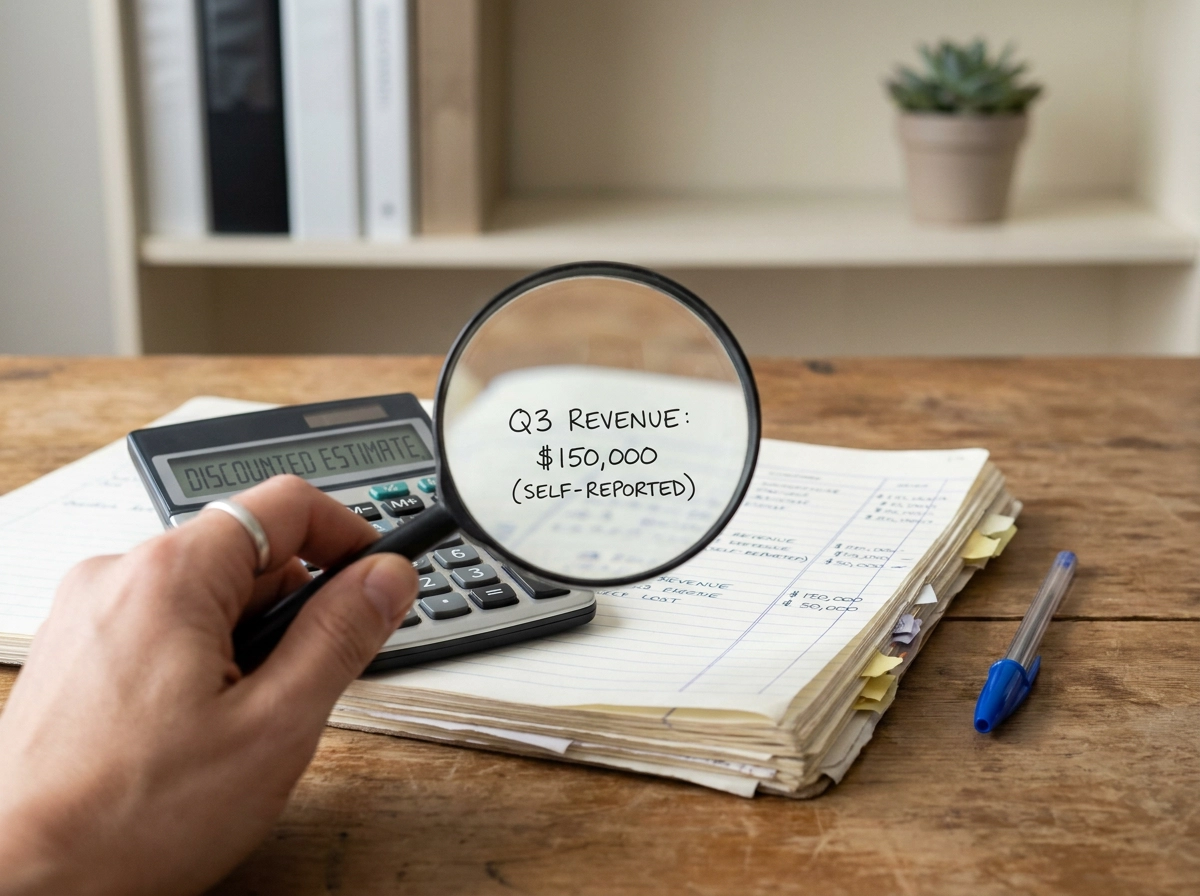
Why Australian Buyers Have Stopped Trusting Self-Reported Numbers
Self-reported revenue and profit figures are the industry default on directory-style listing platforms. Buyers have learned to discount them automatically, which means an unverified number costs the seller money rather than saving it. Buyers test seller representations against evidence during due diligence, and contractual claims are commonly limited by caps and time limits, so recovery after settlement is rarely straightforward (Business Due Diligence in Australia).
The buyer mindset is simple. A listing claiming a healthy profit with no supporting evidence reads as a risk to be priced in, not an opportunity to be bid up.
Verified financials change that dynamic. On Bizzie, sellers connect their Xero account so revenue and profit in the listing come straight from real accounting data instead of a typed-in estimate. The number stops being a claim and becomes a record.
No integration proves everything, though. Add-backs, owner salary adjustments, customer concentration and forecast growth still need your explanation, which is why preparation matters as much as disclosure.
The same discipline applies whether you sell a shopfront or a website, and the avoidable mistakes are documented in 8 Things to Know Before Buying or Selling an Online Business in Australia.
Over the next nine steps, this guide takes you from the sell-or-wait decision through to settlement and handover, including a clearly labelled tax section to take to a registered tax agent.
What to Have Ready Before You List: Prerequisites and Paperwork
Verified financials answer the trust question. They do not answer the paperwork question. Before you list, assemble:
Three years of financials. Financial statements, tax returns and business activity statements, plus a current profit and loss statement and balance sheet. Buyers and their accountants ask for these first, and having them ready shortens every later stage of the deal.
Asset and liability schedule. Plant and equipment, stock, vehicles, debtors and creditors, plus any intellectual property such as trademarks or a website domain.
Contracts and compliance documents. Lease or freehold details, supplier and customer agreements, employment contracts and award classifications, licences and permits.
Entity and ownership records. ABN details, company records or trust deeds, confirmed with your accountant. Check current requirements on the ATO's selling or closing your business guidance and business.gov.au before relying on them.
Personal readiness. Finance documents, landlord consent if you lease premises, key staff who might leave, and a clear plan for what you personally do after settlement.
Sellers should apply the same scepticism buyers do, which is exactly the discipline smart buyers bring to buying a business in Melbourne.
Step 1: Decide Whether to Sell Now or Wait Until After 1 July 2027
Before you set a listing date, settle the question that changes everything else: sell now, or wait until after 1 July 2027?
The policy reality first. Per the Treasury fact sheet dated 18 June 2026 (p2026-781365), all four small business CGT concessions are staying: the active asset reduction, the 15-year exemption, the retirement concession and the small business rollover.
Timing is the lever. The new CGT rules start 1 July 2027 and are prospective only, so business value built up before that date keeps its existing treatment no matter when you actually sell.
That leaves two broad paths to compare: exit in roughly the next 12 to 18 months under current settings, or sell after 1 July 2027 under the new settings, where a flat 50% discount gives way to an inflation-indexed cost base and a 30% minimum tax on real gains.
Scale matters here. Australia has around 2.7 million active small businesses, and over 90% are eligible for all four existing concessions. Eligibility is broad, but still conditional on your own circumstances.
So act in order. Get your indicative number first with the free instant valuation tool on Bizzie, then book time with a registered tax agent before you lock in a timeline. The mechanics from listing through to legal completion and post-sale obligations stay the same either way.
Step 2: Get a Defensible Valuation
Once your timeline is set, the next task is putting a number on the business that will survive scrutiny. Three standard methods cover most small business sales. Capitalisation of earnings suits service and retail businesses with steady profit. Asset-based valuation fits businesses whose value sits in equipment or stock. Market comparables work where plenty of recent sales exist in the same industry. For a step-by-step walkthrough, see What Is My Business Worth? How to Value a Small Business.
Each method rests on adjusted net profit: your reported profit with owner-related distortions removed. Add back your own salary, since a buyer will replace it. Add back one-off or non-recurring costs, such as a one-time legal fee or repair. Add back personal expenses run through the business. Document every adjustment with a figure and a reason, because buyers scrutinise add-backs harder than any other line in your financials.
A defensible figure does three jobs. It anchors negotiation, it supports any CGT concession you claim, and it stops buyers chipping the price during due diligence. An unsupported number invites exactly that.
Use Bizzie's free instant valuation tool for an indicative range in minutes. For larger or more complex businesses, have an accountant or broker validate the figure. Then write a one-page summary of your valuation basis: the method, the add-backs and the reasoning. You will reuse it in your listing and hand it over during due diligence.
Step 3: Prepare the Business and the Paperwork for Due Diligence
Build the pack before you list, not after a buyer appears. A complete pack signals a well-run business and moves the deal faster than any sales copy.
Tidy the numbers first. Reconcile the accounts, strip personal expenses from the business ledger, and document every add-back so the buyer's accountant can follow your working.
Then reduce key-person risk. Document your processes, formalise supplier arrangements, and give key staff a reason to stay, because buyers pay less for a business that only works when you are standing in it.
Check what transfers, and whether it can transfer. Leases, licences, supplier agreements, warranties and customer contracts usually need consent or assignment, and some cannot move at all. Confirm this before you promise them in a listing.
Finally, order the documents buyers ask for first:
Three years of financial statements, BAS and tax returns
Payroll records and superannuation compliance
Current profit and loss, balance sheet, debtors and creditors
Lease, licences and material contracts
Payroll, superannuation and unresolved tax lodgements delay more deals than anything else. For the buyer's side of the same process, see our guide to due diligence when buying a business. A complete pack turns due diligence from an interrogation into a confirmation.
Step 4: Sell Through a Broker or Sell Direct
With your due diligence pack ready, decide who fronts the sale: a broker, or you.
The broker case. A good broker brings an established buyer network, qualifies enquirers before they reach you, manages confidentiality, negotiates on your behalf, and handles the chasing and follow-up you would otherwise carry alone. Commissions are typically a percentage of the sale price, vary by state and deal size, and must be confirmed in writing before you sign an agency agreement.
The direct case. Selling without an intermediary costs less, gives you full control of the message and puts you in direct contact with the buyer. Confidentiality is still manageable with a clear NDA process and staged disclosure: NDA first, then proof of funds, then the financial detail.
The hybrid path. Many sellers now list the business themselves at no cost to generate enquiries, then bring in a broker or solicitor for the final negotiation and contract stages.
Bizzie lists businesses free for individual sellers and for brokers alike, with no subscription, no listing fee and no cap on active listings for brokers. That makes direct or hybrid selling realistic for first-time sellers, even in competitive markets such as Perth, where buyers are actively searching: Buying a Business in Perth: What You Need to Know.
Whichever route you take, the next step is turning those numbers into a listing buyers trust.
Step 5: Write a Listing Buyers Actually Trust
Your listing's job is to answer a buyer's first question: can these numbers be trusted? Lead with revenue, profit and the basis of your valuation. On Bizzie, you can connect your Xero account so those figures come straight from real accounting data rather than a self-reported estimate. Verified numbers earn a better starting point in negotiation; adjectives earn scepticism.
Then describe what the buyer is actually purchasing: customers, recurring revenue, contracts, equipment, staff, location, systems and the goodwill you have built.
Explain why you are selling, within confidentiality limits. A plausible reason such as retirement or relocation removes doubt. A vague or evasive reason reads as a red flag and invites speculation about problems you have not mentioned.
Include the practical details buyers filter on:
Asking price or price range
Turnover bracket
Lease terms and rent
Number of staff
Hours the owner works
Handover support you will provide
Avoid the common pitfalls: generic "great opportunity" copy, unverifiable claims, photos or details that reveal your identity when confidentiality matters, and omitting known issues. Those issues surface in due diligence anyway, and late discovery costs you credibility and price.
For more on positioning your business before it goes live, see How to Sell Your Business in Australia: A 2026 Guide.
With a listing that answers the obvious questions, you can move on to managing the enquiries it generates.
Step 6: Handle Enquiries and Qualify Buyers
Once your listing is live, speed and structure decide which enquiries become offers.
Set a response protocol
Answer every enquiry within one business day. Momentum matters: a buyer waiting three days for your reply is already browsing other listings. Responding quickly to every enquiry is the habit that separates sellers who close from sellers who sit on the market for months.
Gate information in stages
An NDA, signed.
Proof of funds or finance pre-approval.
Detailed financials and the due diligence pack.
Serious buyers expect this sequence. Time-wasters rarely clear step one, which is exactly the point.
Ask the qualifying questions
How soon do you intend to buy?
Are you paying cash or arranging finance?
What industry experience do you have?
Will you work in the business?
Are you buying alone, or with a partner or investor?
Keep a buyer log
Record who received what, what they asked and how they responded. It makes comparing offers objective and creates a paper trail if confidentiality is ever questioned.
Protect confidentiality
Use one point of contact. Keep staff away from viewings where possible and limit access to sensitive documents to those who need it. If a buyer will not provide the basics, disengage politely and firmly: "I can share financials once the NDA and proof of funds are in place." No apology required.
Next, what happens when a serious buyer starts digging.
Step 7: Survive Due Diligence Without Losing the Deal
Once you have qualified a buyer, due diligence begins. Expect parallel checks across financial, legal, tax, operational and compliance matters. The buyer's accountant and solicitor will request documents from the pack you prepared earlier, so a complete, indexed pack shortens this stage considerably.
Anticipate the predictable questions before they arrive. Have written answers ready on add-backs, customer concentration, staff entitlements and turnover, lease terms, and your reason for selling. Attach the evidence, not just the explanation.
Set a timetable with a defined end date and a single document room. All requests go there, and nothing is shared outside it. An open-ended due diligence period is where deals quietly die.
Transparency protects your price. A known issue disclosed in week one is a negotiating point. The same issue discovered in week four becomes grounds for a price cut or a withdrawal. Disclose early, in writing.
Watch for unserious buyers. Repeated document requests without progress, missed deadlines, or a refusal to commit to a timeframe are warning signs. Keep the business on the market until conditions are genuinely satisfied. Waiting costs you leverage and turns away real buyers.
Step 8: Understand Your Tax Position Before You Sign
Once due diligence closes and you are close to signing, pause on the tax position. This section is general information only, not tax advice. Confirm your own position with a registered tax agent before making any timing or structure decision.
Per the Treasury fact sheet dated 18 June 2026 (p2026-781365), the four small business CGT concessions remain: the active asset reduction, the 15-year exemption, the retirement concession, and the small business rollover.
From 1 July 2027, the turnover threshold for the 50% active asset reduction rises from $2 million to $10 million. All 2.7 million active small businesses in Australia are expected to be eligible for that reduction under the new threshold, a considerable widening.
Also from 1 July 2027, the flat 50% CGT discount is replaced by an inflation-indexed cost base plus a 30% minimum tax rate on real gains. If you have held assets for years, that changes the arithmetic. A 30% minimum tax also applies to the minority of small businesses using discretionary trusts. Primary production income and fixed trusts are exempt, and over 90% of active businesses are expected to be unaffected by the trust rule in any given year.
The changes are prospective only. Value built up before 1 July 2027 keeps the existing treatment, so you may have more room than a single settlement date suggests.
Use this as the prompt to talk to your accountant about structure, timing, and the sequencing of your exit. Check ATO and business.gov.au guidance at source before relying on any specific concession. Get this conversation done before you sign, not after.
Step 9: Settlement and Handover
With your tax position confirmed, the sale agreement governs everything that follows. Your solicitor prepares or reviews it, sets the deposit (commonly 10%, held in trust), and records any conditions that must be satisfied, such as finance approval, due diligence or landlord consent. Settlement typically follows 30 to 60 days after conditions are met, and your solicitor handles the transfer of the business to the buyer.
At settlement you must transfer or notify:
Employees, including accrued leave and superannuation entitlements.
Licences, registrations and permits, some of which cannot be assigned.
Supplier and customer accounts and any novated contracts.
Lease or landlord arrangements.
Regulator and ATO paperwork.
Protect the goodwill you just sold with a written handover plan: training days, introductions to key customers and suppliers, and system access for the buyer.
Final accounts adjust the price at settlement date: stocktake and apportion stock, prepayments, rent, and outstanding debtors or creditors.
Then close the loop by retaining your records. Confirm with your accountant which documents to keep and how the sale is reported in your return.
Common Mistakes First-Time Sellers Make
Settlement rewards preparation, not optimism. First-time sellers who stumble usually repeat one of these five mistakes.
Listing before the numbers are ready. A price invented on the spot is the fastest route to a listing that sits for months. Gather three years of financials and an indicative valuation before you publish anything.
Pricing on emotional attachment or an unprovable figure. Your history with the business is not a valuation input, and a self-reported profit you cannot substantiate is simply a discount waiting to be applied by the buyer's accountant.
Treating due diligence as the buyer's problem. It is your preparation task. Sellers who arrive with a complete pack close faster and closer to their asking price.
Ignoring the tax timeline. Per the Treasury fact sheet dated 18 June 2026, the CGT changes commence 1 July 2027. That makes timing a commercial decision, not a formality, so speak to a registered tax agent before you sign, not after.
Failing to document add-backs, personal expenses and one-off costs. Undocumented adjustments are the most common reason a buyer chips the price down. Record every adjustment and the reasoning behind it.
Avoid these five and you negotiate from evidence rather than hope.
Frequently Asked Questions About Selling a Business in Australia
Even a well-prepared seller will have questions. Here are answers to six common ones.
How long does it take to sell a small business in Australia?
Typically three to twelve months. Smaller retail or service businesses can sell in three to six months if financials are verified and the due diligence pack is ready. Larger or complex deals often take nine to twelve months or more.
How much does it cost to sell a business?
Broker commissions are usually a percentage of sale price, often five to ten per cent. Legal and accounting fees vary. Advertising costs depend on the platform. Listing on Bizzie is free for sellers and brokers, with no subscription or listing fee.
Do I need a business broker?
A broker earns their fee when they bring qualified buyers, manage confidentiality and negotiate. A first-time seller with a straightforward business may suit a direct or hybrid approach.
How do the 2027 CGT changes affect when I should sell?
From 1 July 2027, the flat 50% CGT discount is replaced by an indexed cost base and a 30% minimum tax on real gains. The changes are prospective, so value built before that date keeps existing treatment. Get tax advice before setting your timeline.
How do I sell a business confidentially?
Use an NDA before disclosing financials, stage information in layers, and keep one point of contact. Do not involve staff, and schedule viewings outside trading hours.
What does verified financials mean on Bizzie?
Sellers connect Xero so revenue and profit come directly from real accounting data rather than a self-reported estimate. This gives buyers confidence and reduces price chipping.
Your Next Steps to Selling Your Business
Selling a business rewards sequence, not speed. Work in this order.
1. Start with the number, not the listing. Before you write a single line of a listing, use the free instant valuation tool on Bizzie for an indicative range, then have your accountant confirm or adjust it. Committing to a price before you have both is guesswork.
2. Fix your timeline against the CGT changes. Book a registered tax agent early. The small business CGT concessions continue, and the new settings start 1 July 2027, so the decision between selling under current settings and waiting is a commercial one, not an administrative one.
3. Build the due diligence pack now. Three years of financials, contracts, an asset schedule and compliance documents. Buyers read a complete pack as a well-run business. They read promises as risk.
4. List with evidence, not adjectives. Connect Xero so your revenue and profit figures are verified against real accounting data. Keep a buyer log, and qualify every enquiry through an NDA and proof of funds before releasing detail.
5. Keep the order. Tax, paperwork and price each depend on the step before them. Get the sequence right and all three fall into place.
Selling a business is a sequence, not a single event. The first move is finding out what yours is worth.
Conclusion
Selling your business in Australia is a sequence, not a race. Get the foundation right: know your defensible valuation, plan around the CGT changes from 1 July 2027, and prepare a due diligence pack before you list. Then build buyer trust with verified financials from real accounting data, not self-reported estimates. That combination protects your price and keeps the deal moving.
The value is simple: a well-sequenced sale reduces risk, shortens negotiations, and gives you confidence at settlement. Start with the number, not the listing.
Your next step is clear. Use Bizzie's free instant valuation tool today, then speak with your accountant and registered tax agent. Put the sequence to work, and you will sell from strength, not guesswork.